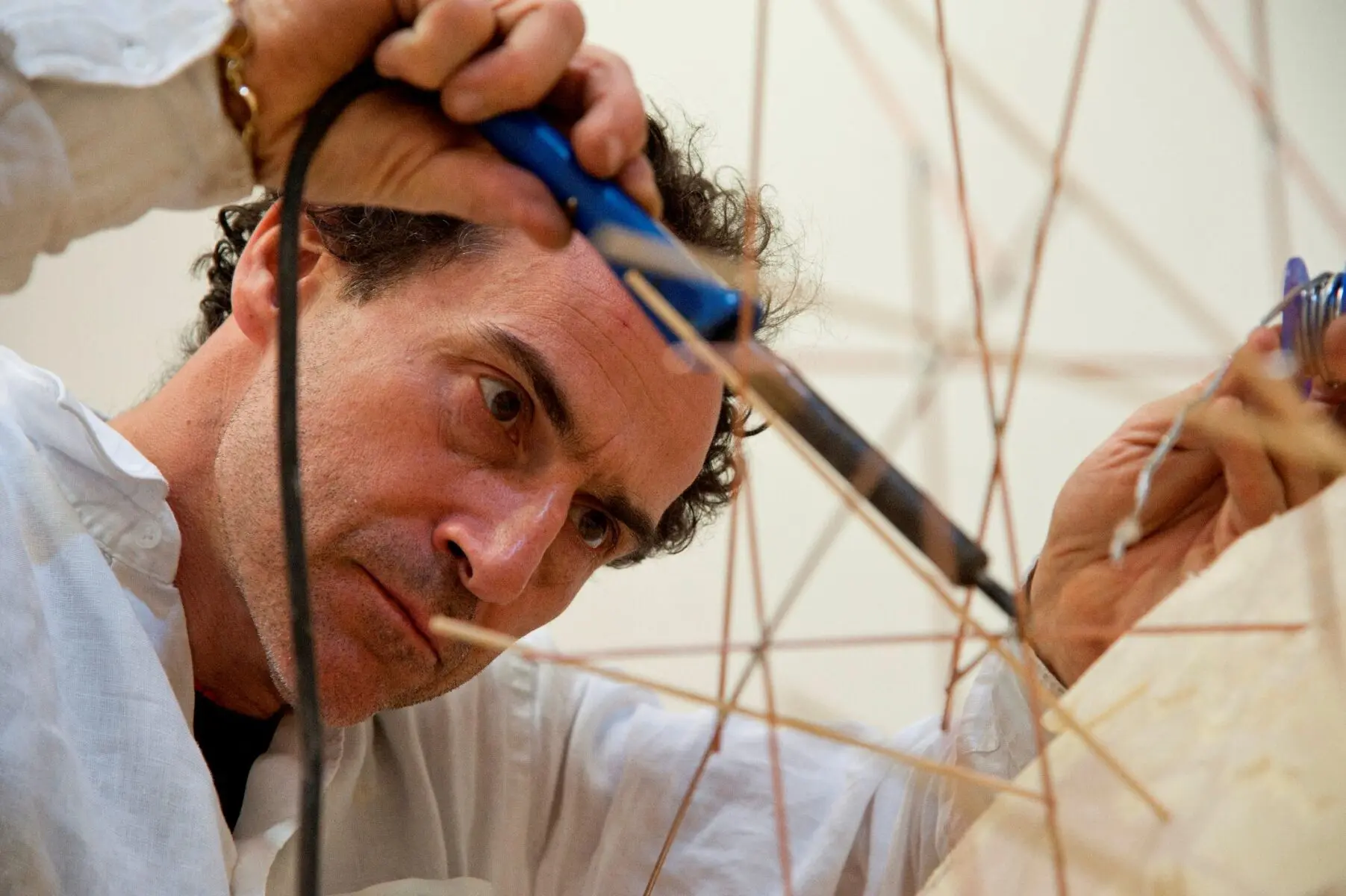
Atelier Van Lieshout: Past, present & future
This article was originally published in June 2024 in Curated edition 2.
Artist, designer, innovator, rulebreaker—these are the first four words that come to mind when asked to describe Dutch visionary Joep van Lieshout and his studio, Atelier Van Lieshout. But rigid descriptions and categorisations don’t feel quite right for an artist that produces such genre-defying work. Since 1995, he has created everything from large-scale sculptures to small office chairs that transcend the form-vs-function debate in a way that’s attracted both global acclaim and controversy. And as he and the team enter their next chapter, complete with a spate of new pieces for its permanent collection at art’otel Amsterdam, it felt like the right time to visit the studio for a catch up.

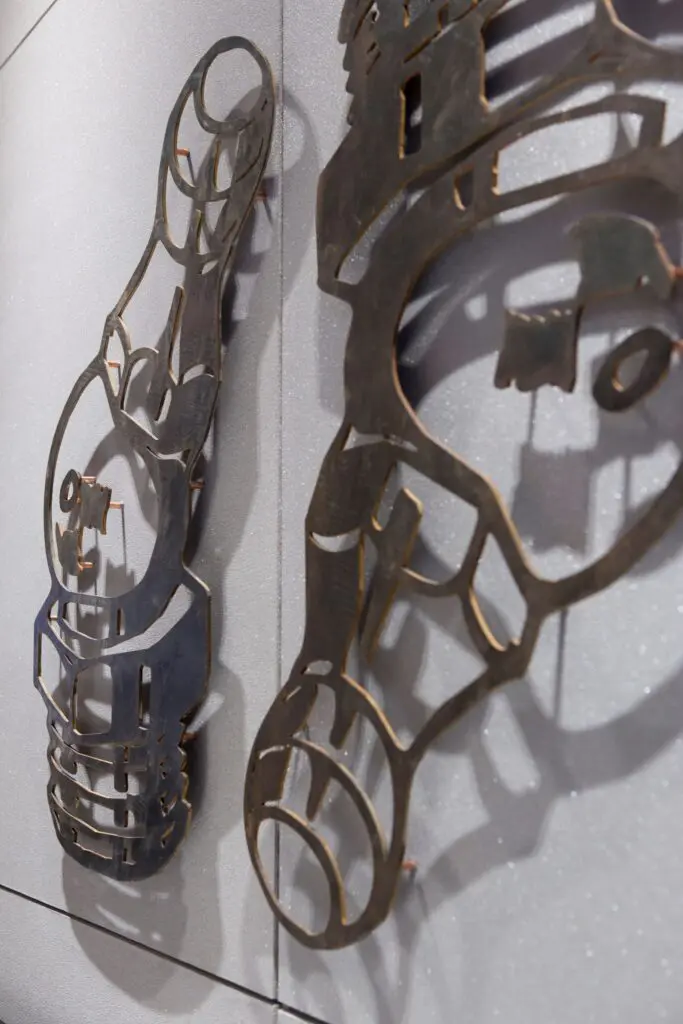
The sprawling Rotterdam industrial site is home to a full-time workshop, as well as the headquarters for its contemporary arts institution Brutus (including massive exhibition space and outdoor sculpture garden). Inside is a playground of curiosities. To the left of the front door, a canteen with meat sculptures hanging from the ceiling. A few steps further, an eight-foot silver astronaut. There’s a constant flow of artists, carpenters and metalworkers at play, sawing, spray painting, stepping back and observing the pieces at their stations. In short: it’s a space full of life, activity, and some very big rats (no, not real rats, but carefully rendered metal rats that are absolutely worth a visit).
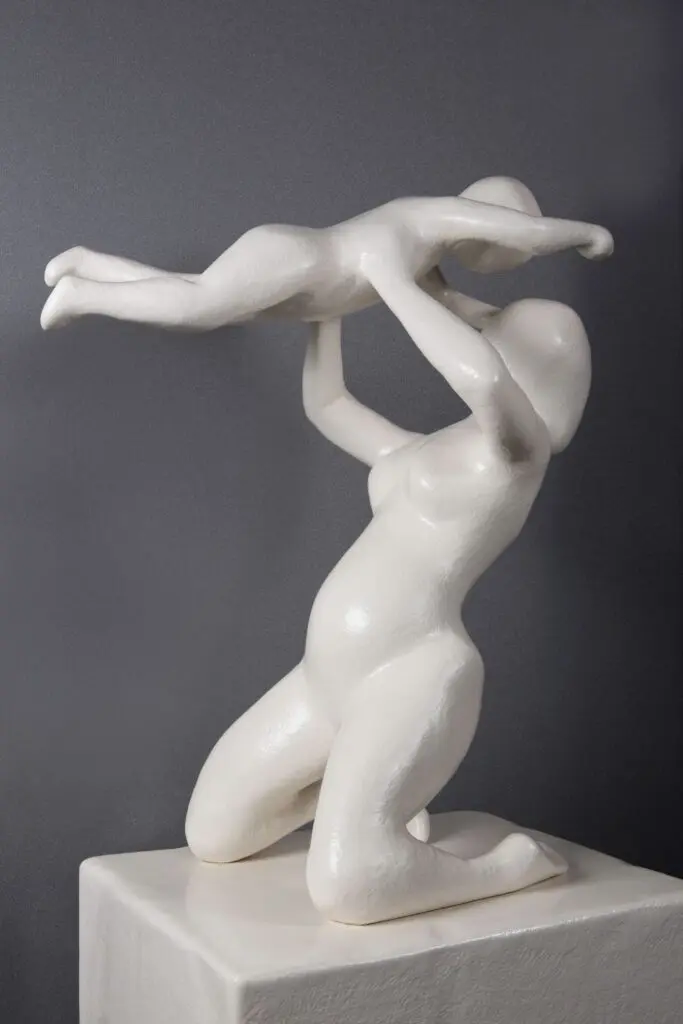
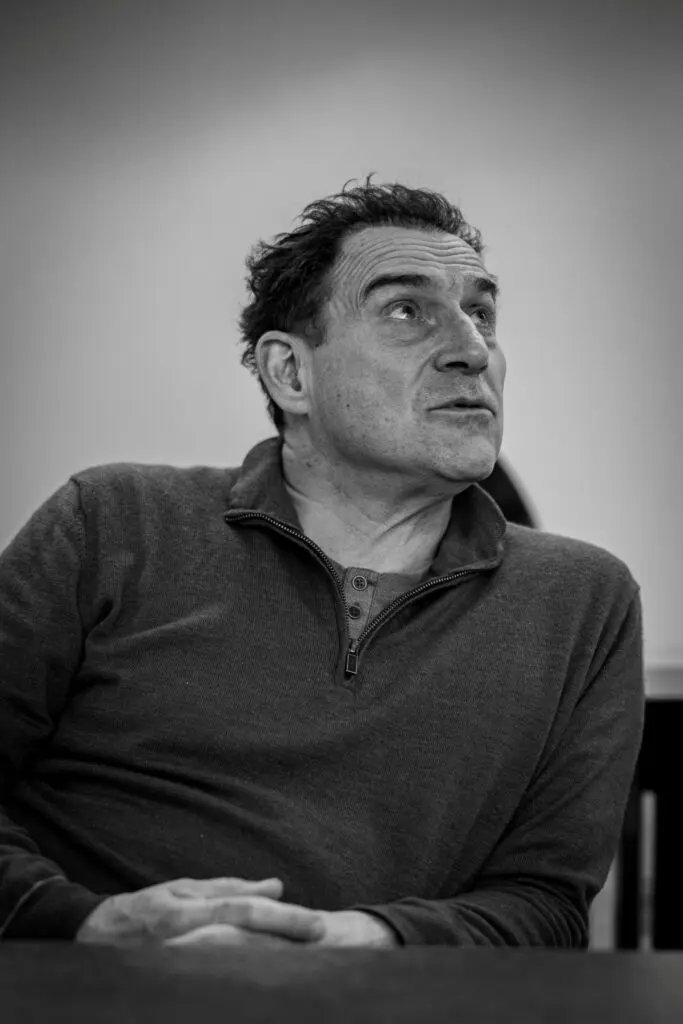
It’s immediately clear that this operation is a well-oiled machine, and Joep van Lieshout is its engineer. The 60-year-old has spent the better part of four decades building an empire alongside this evolving team, becoming a household name in creative circles worldwide and a prominent figure changing the landscape of his home community in Rotterdam (more on that later). His body of work is a lot to process, especially when it comes to the way it reflects his personal history and thoughts on life, humanity, and society. So, who better to delve into it than van Lieshout himself?
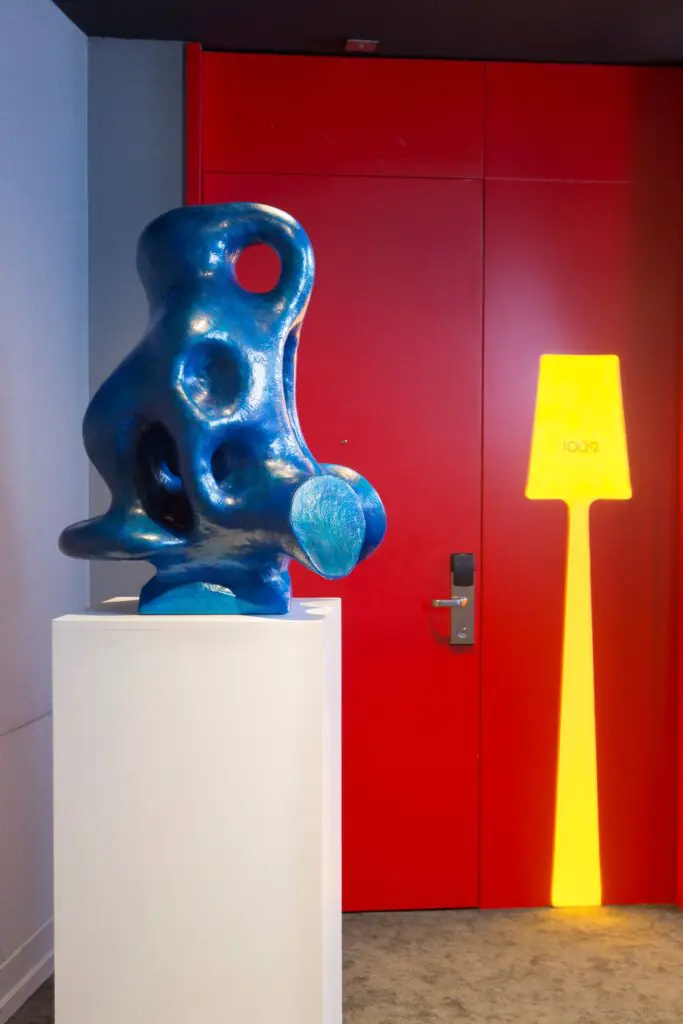
We sit down in the upstairs office, a quieter, secluded area decorated in brown leather AVL office chairs. Most notable, the impressive collection of art and reference books arranged in chronological order on the shelves of the main meeting room. This becomes the inspiration for our conversation—a look backwards and forwards at each significant era for the artist and the business. Of course, we start at the beginning.
1. On beginnings
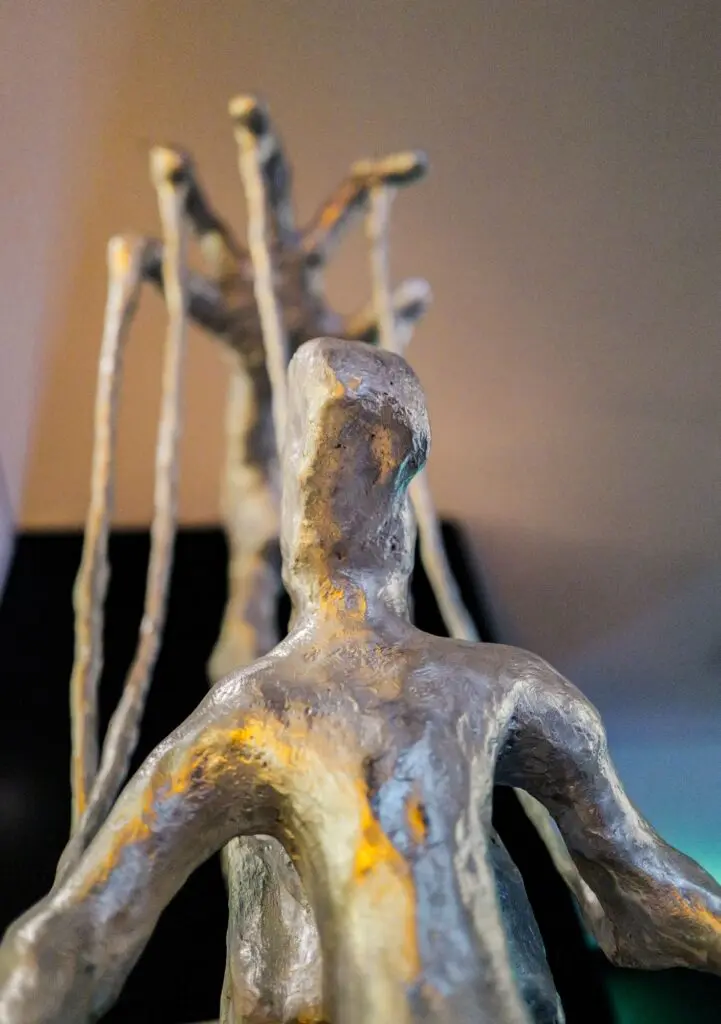
“I think it was unique that I started my art career as young as I was. I grew up in a village in Ravenstein. When I was in middle school, I hesitated between focusing my studies on science or art. I settled on art at 14 years old, and by 16 I was already on my way to art school in the big city (Rotterdam). Most of my fellow students were much older—they’d studied before, they went to the army, so it was an interesting dynamic. I couldn’t go to the army. I said ‘I’m better as an artist than as a soldier. Just let me make art, you won’t regret it!’ And I was lucky because they said ‘OK’ and let me go. But the difference in age between 16 and 18, or 20, or 22, is huge. I really had to do it by myself and find my own way – I didn’t belong.
I was an abnormal student in another sense, too. I was making a mixture between functionality and sculpture. It could be a boat or tool or furniture, but as a sculpture as well. This was not common at that time. You had art, design, architecture, sculpture and painting. It was much more divided, and I rejected that. I always have been trying to find my own way, my own path. Always looking for insecurity and the unknown. Danger and taboo. And trying to transgress any border you come to. My career when I reflect on it has been closer to an exploration. Like taking a ship and trying to find a part of the world which has not been discovered yet.”
At this point I’m interested to know how one transitions from being a new artist to considering themselves established. I ask him if there’s a specific turning point or project where he felt like he knew he “made it” or that this was going to be his long-term career prospect.
2. On the big break
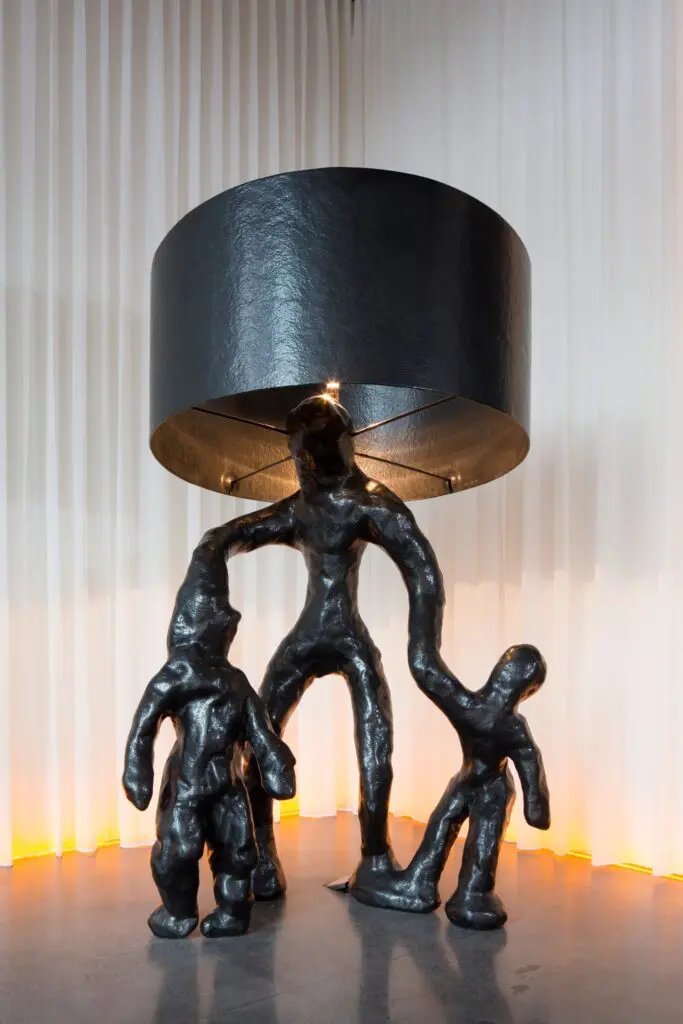
“There have been many important firsts in my journey. First big museum show. First commission. But the most interesting from my earlier years was at the start of the nineties—a commission for [famed Dutch architect] Rem Koolhaas. I was still a young artist. Rem designed a major building in France (a concert hall, conference centre, and exhibition space) and he asked me to design and make 10 different bars, all the stairs, and 500-or-so toilets for it. This was a huge commission for me, and I was inexperienced.
For context, the European Union as it is today didn’t exist yet. France was really a foreign country to me. People only spoke French there, which is not a language I was strong in. So here I am, using a typewriter or hand-writing documents with my high-school French to communicate. It was a very exciting, complicated commission that really pushed me to the extreme of what was possible. And we succeeded—but it was a struggle.
The client didn’t necessarily share Rem Koolhaas’s vision of modernity or like anything that he proposed. The attitude was ‘we don’t want an artist designing interiors.’ They tried to get me out of the project multiple times and every time I had to come back in. At one point they said ‘we only work with real companies, and you aren’t a real company, you’re an artist’ so I drove to the chamber of commerce to set up ‘a real company’ the same day. When you register a company, you need to provide a name, so I chose Atelier Van Lieshout. Atelier is a French word that means workshop.
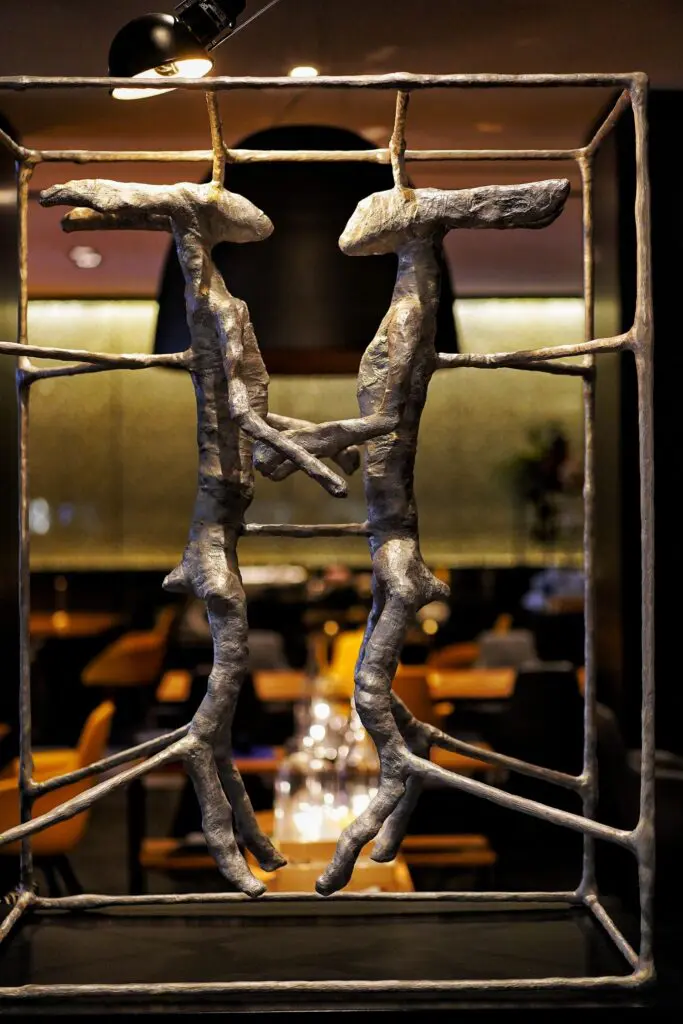
A week later I return to the client with my papers. Finally get to work, then at a certain moment I get this call from the project architects who were there on site. They tell me they found something in the contract that is potentially worrisome for me. I asked what it was, and they said: ‘all the pieces you produce must be onsite on June 1st at 9 o’clock in the morning, otherwise they have the opportunity to cancel it without paying you anything.’
I call up all my friends and we decide we’re going to work in three shifts to get it done. I get to the site at 7:00am and the client was already there with his notebook jotting down everything that wasn’t finished. At 8:00am, huge trucks roll in from The Netherlands with all the prefabricated stuff along with 10-15 people from my studio. By 9:00am everything was standing. It was very satisfying.
And this very difficult project made me what I am.”
3. On the present day
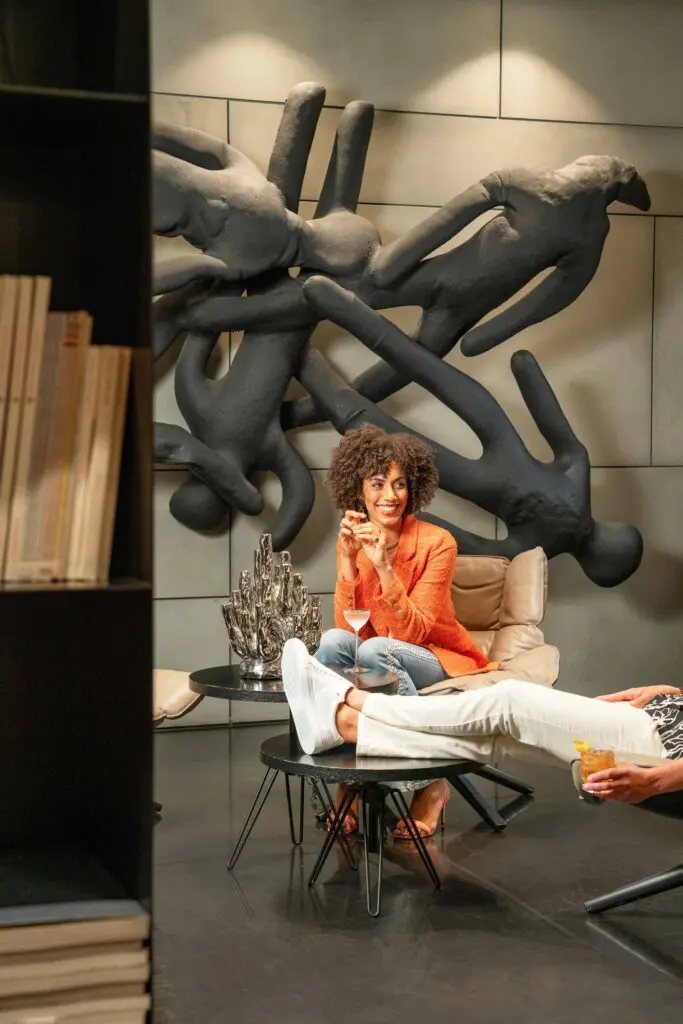
“My team started out with some interns after I left art school and slowly grew to the size it is now over 20-something years. I think what is very nice about the present era is the level of trust we have between us. I come with my crazy ideas that would maybe seem ridiculous, expensive and time-consuming to outsiders. But even when you think it’s a stupid idea, we know it will turn out good. There’s 20 people who work very hard and they believe that the unpredictability of my intuition will guide us in the right direction. That’s what I always (for a large part of my career) believed, and now also a lot of people believe that and that’s great. So, we make a lot of things. The most exciting thing is that I always find some new passion, subject or body of work that makes me enthusiastic. I still don’t know what I will do tomorrow [he laughs].
Besides our own work, supporting Brutus, the foundation I started 15 years ago, is also very important. That was one of those crazy ideas that has been growing very slowly and skyrocketed in the last several years. We currently have one of the biggest exhibition spaces in The Netherlands and certainly one of the best, so we get a lot of attention and create a lot of opportunities. We do parties and exhibitions, but there’s more space for other artists of all ages and disciplines. The one thing they all have in common? There’s always something challenging. It’s what we say in Dutch: ‘zonder wrijving geen glans’ or ‘without friction, no shine.’ If you want to do something special it has to be a little like that, and that’s exciting.”
4. On the future
“The most complicated thing I’m working on is to make a building for Brutus that will be bigger and more iconic than what we have now. I combined a 10,000 square-meter building with a more commercial part and a more residential part and altogether it becomes one organism feeding each other. It will be here in Rotterdam.
This takes a long time, though. We made the first sketches seven years ago and have been working for the last three-and-a-half to four years with a team of architects and developers almost daily. This is an area that is redeveloping from harbour to city. You need to have new zoning to get the building permits, so you must work with the government – that’s its own dynamic.
There’s a book that we made to convince the city to give us those permits – it’s a huge development. It will have my studio, a sculpture terrace, a park, a theatre, and in the middle is a museum. There will also be housing, which will include alternative living and studios for a lot of artists. From the sculpture garden you can see the city and the harbour (it’ll be about 20m high). So that’s the plan of the future. As the name suggests, it will be brutal!”
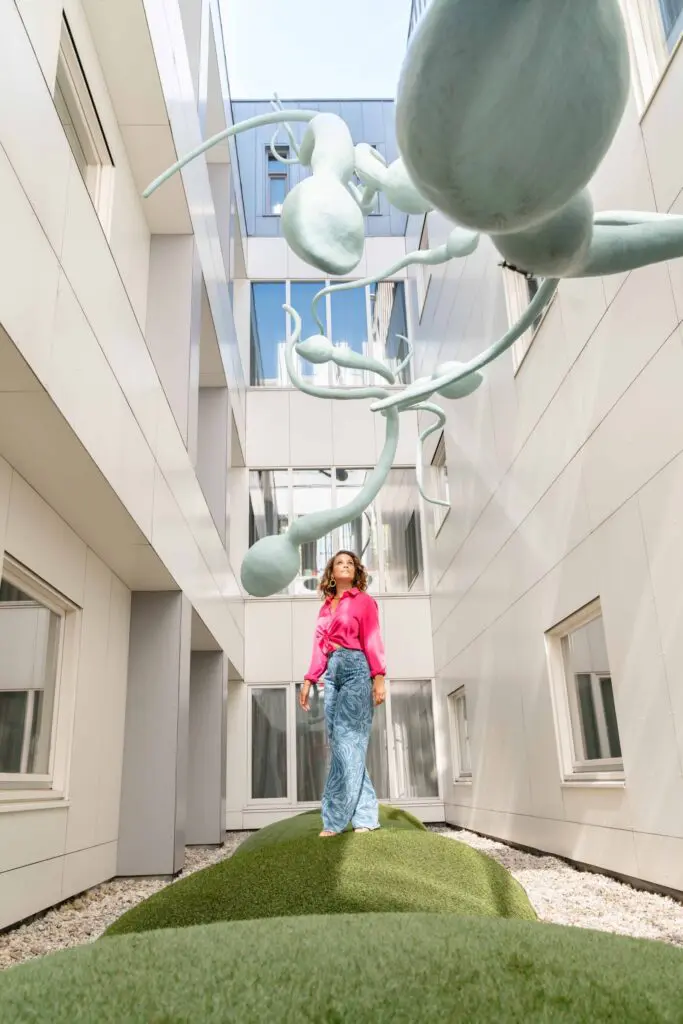
It’s safe to say that Atelier Van Lieshout’s contributions to the history of art, design and culture are already monumental, yet still in the process of being written—especially when it comes to the very fabric of his Rotterdam community. For now, we’ll all be waiting patiently to see how it unfolds. And in the meantime, enjoy the works already available both at Brutus, art’otel Amsterdam, and galleries and public spaces around the world.
“It’s interesting, I didn’t have a specific vision for what my future as an artist would look like. When I was young there was no guarantee or sign that I would be successful. But I also never wondered how I was going to get money either. My horizon was maybe a couple of hours or days. And I still don’t worry about that…sometimes a little bit but, in the end, I really believe if I follow my intuition and stay true to my vision I will succeed.”

