Curated By: A Dish to Remember
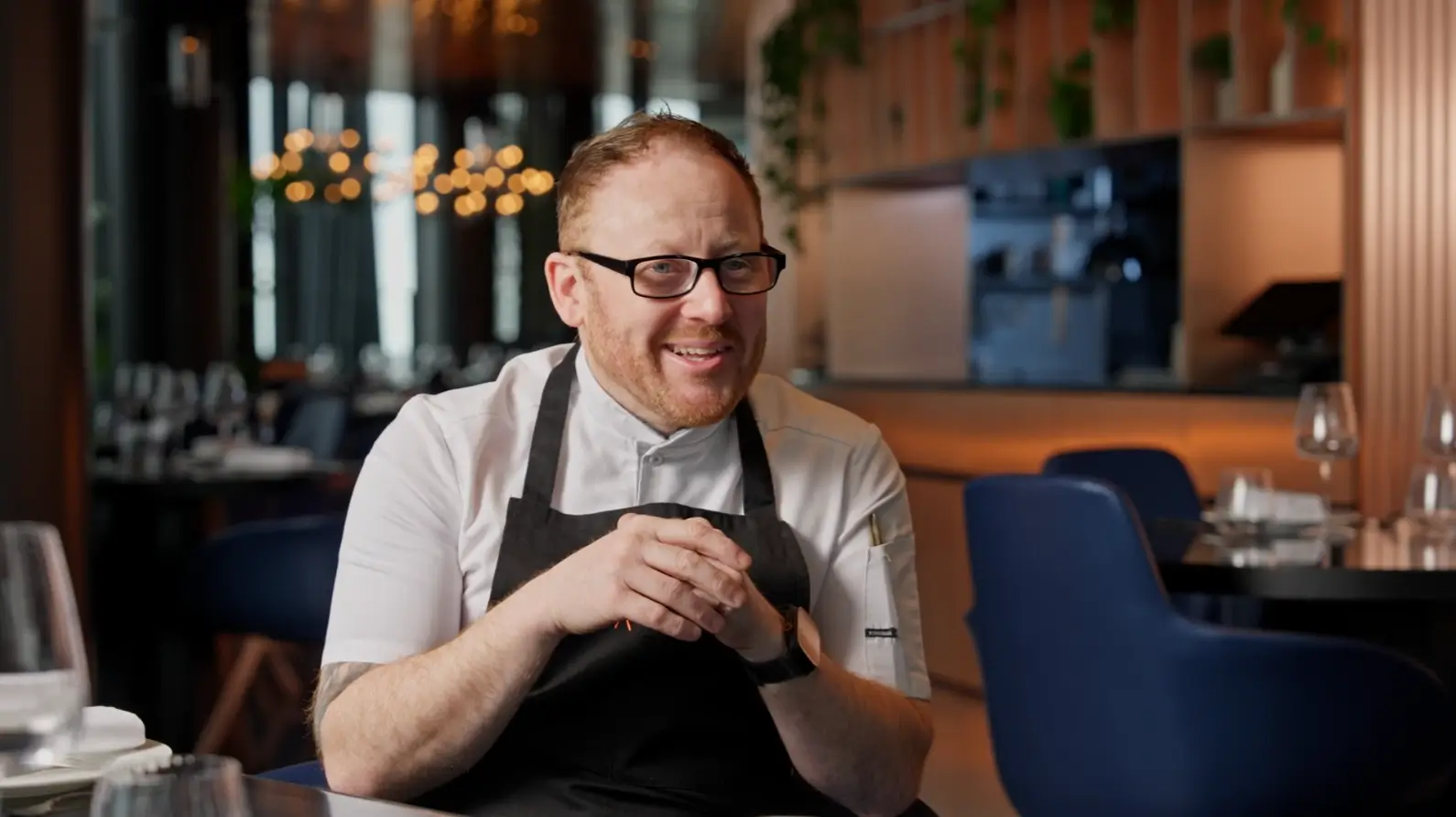
Long before Kenny Atkinson encountered Michelin-starred kitchens, lobster or caviar, there was his grandfather’s allotment in Newcastle. There were potatoes to dig, mint growing in the garden and roast lamb served every Sunday at his gran’s table. Years later, those early experiences still inform his cooking as Concept Chef at Solaya, 25 floors above Hoxton, where his dishes reveal a philosophy built on simplicity, patience and respect.
Simplicity with purpose

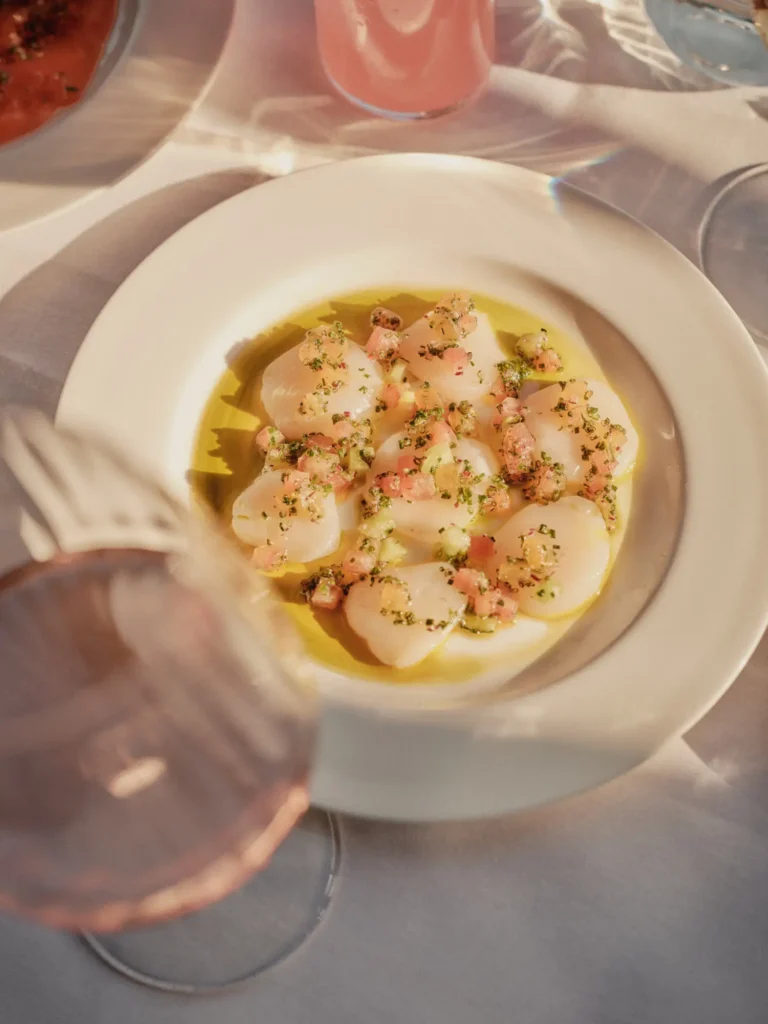
Ask Kenny to name the one dish that represents everything he believes about food, and he doesn’t reach for something elaborate. He opts for hand-dived scallops, sliced thin, dressed with lemon zest, a little lemon oil and a touch of salt, just enough to let them marinate while retaining their sweetness. Over the top goes a sauce vierge, the classical French dressing made with diced tomato, shallot, garlic, coriander, basil, lemon juice and zest, cooked down until it’s fresh and vibrant rather than heavy.
Each ingredient has been carefully chosen and given the space to shine. “For me, it emphasises simplicity and just great cooking,” he says, and that simplicity is the point.
Kenny’s cooking has shifted over the years, he explains, not because trends demanded it, but because he did. “When you’re young, you’re passionate, you want to try and do as much as you can on a plate. Over time I’ve become a bit more mature in my food, pulling things back, being more simplistic.”
Get a perfect piece of fish, he says, and the job is to complement it without overwhelming it. “It’s just going to dilute that main ingredient, confuse it. It’s about having the confidence to step back.”
Watch the scallop dish come together and you see that confidence in practice. Nothing is rushed and every element has a purpose. It’s a dish built to feel effortless on the plate precisely because of how much care went in before it ever reached one.
Respect begins with the ingredient
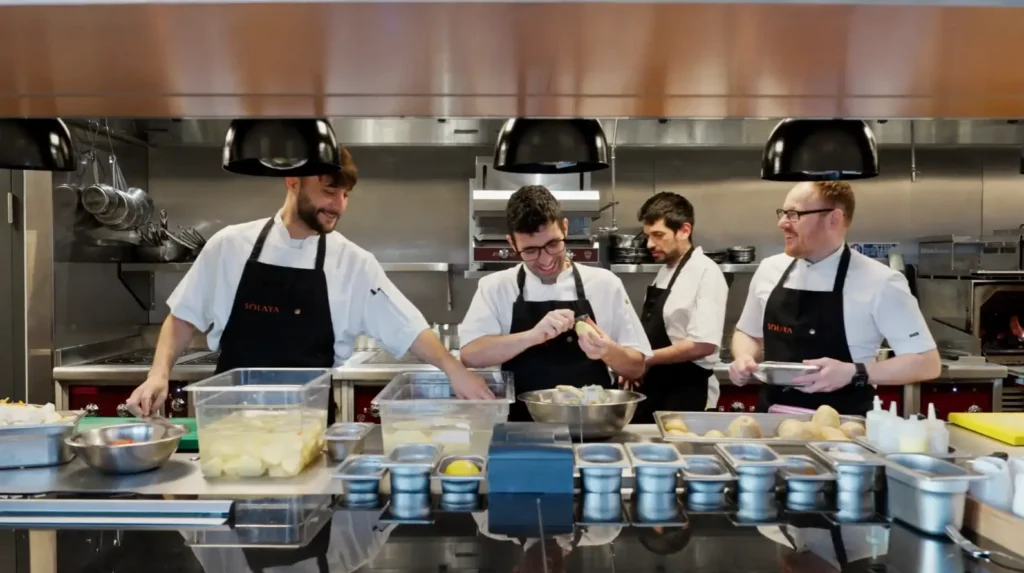
That care isn’t a technique Kenny picked up in a professional kitchen. It goes back further to his grandfather’s allotment in Newcastle, where a young Kenny helped plant potatoes, peas and carrots and then waited months to dig them up.
“We know these things take time,” he says now.
Later, a mentor in London made a point of taking his young chefs to meet the farmers and fishmongers behind their ingredients, insisting that ordering “10 sea bass and 10 portions of asparagus” over the phone wasn’t enough. You needed to understand the journey.
“There’s time, love and passion that’s been put into growing asparagus, growing rhubarb or picking wild herbs,” he says. “Our job is all about passion, and respecting that.”
Kenny’s love of food developed as his career introduced him to ingredients he had never encountered while growing up. He still remembers tasting lobster and caviar for the first time. “This just blew my mind,” he says.
Those experiences left him wanting to learn more. What began with the energy and camaraderie of the kitchen developed into a profound appreciation for ingredients, where they come from and how they should be treated.
That understanding shapes everything that follows. It’s in the way a kitchen tastes a dish and searches for anything that could be improved, and the insistence on hearing from the sommelier and restaurant manager as well as the head chef, because “it’s not always right to rely on my palate”.
Respect for the ingredient is central to Kenny’s method.
The table that started it all
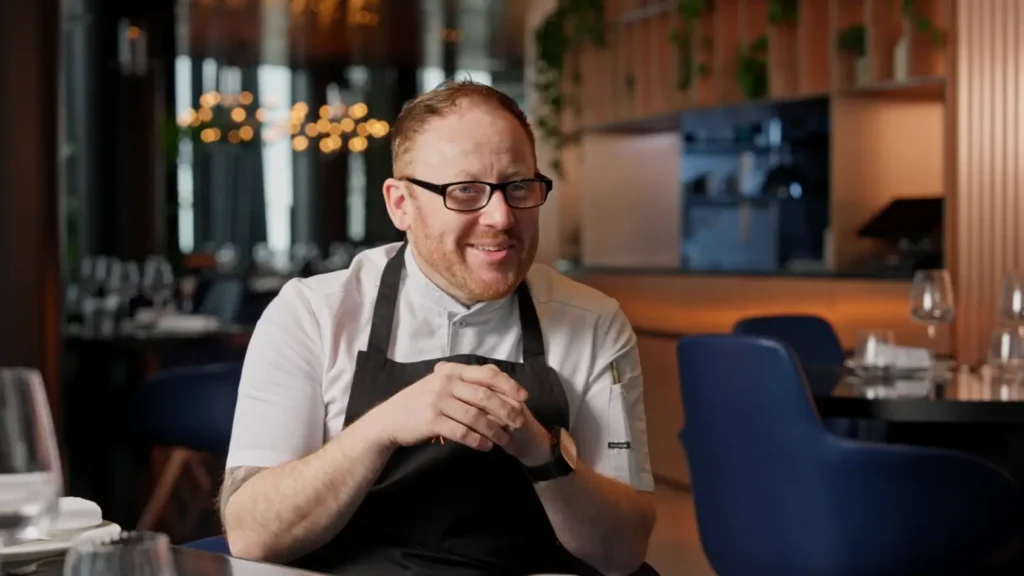
Ask about food and family, though, and the conversation becomes nostalgic. Every Sunday, growing up, the family gathered at his gran’s house for a roast of lamb, roasted potatoes, pease pudding and a mint sauce made from mint his grandad grew in the garden.
“I don’t think I actually appreciated it at that young age,” Kenny reflects. “It’s now, at an older age, when I grasp that smell or that taste again, it just takes me back to that moment, which is kind of special.”
That lamb, he says, has stayed with him for nearly 30 years. He still measures every piece he cooks against it.
It’s a striking admission from a chef with Michelin stars and two Great British Menu wins to his name that the standard he’s still chasing was set at a kitchen table in Newcastle, by a grandmother who had no idea she was teaching a future chef. For her, Sunday was simply the day the family came together around the table.
Kenny’s carried that forward. Sundays are still his day with his own family, when he switches off from the precision of the professional kitchen and cooks for them at home.
“Life’s short,” he says. “You’ve got to appreciate it while you’ve got it.”
Hospitality as an act of emotion

This thread of food as memory, connection and something owed respect runs through everything Solaya does. Kenny doesn’t separate the craft from the feeling behind it. “I think hospitality and food is the business of emotions,” he says. “We are all passionate people, and our passion comes through onto the food.”
In a world increasingly shaped by ordering apps and screens between guest and kitchen, he’s clear about what he believes matters most: “Hospitality is about people. It’s people that makes it special.”
Standing at Solaya’s windows at golden hour, watching the scallop dish leave the kitchen, it’s easy to trace Kenny’s journey from his grandad’s allotment in Newcastle and Sunday lunch at his gran’s table to a dish defined by restraint and respect for every ingredient. It’s not a complicated story. It’s just, as Kenny would say, a considered one.

