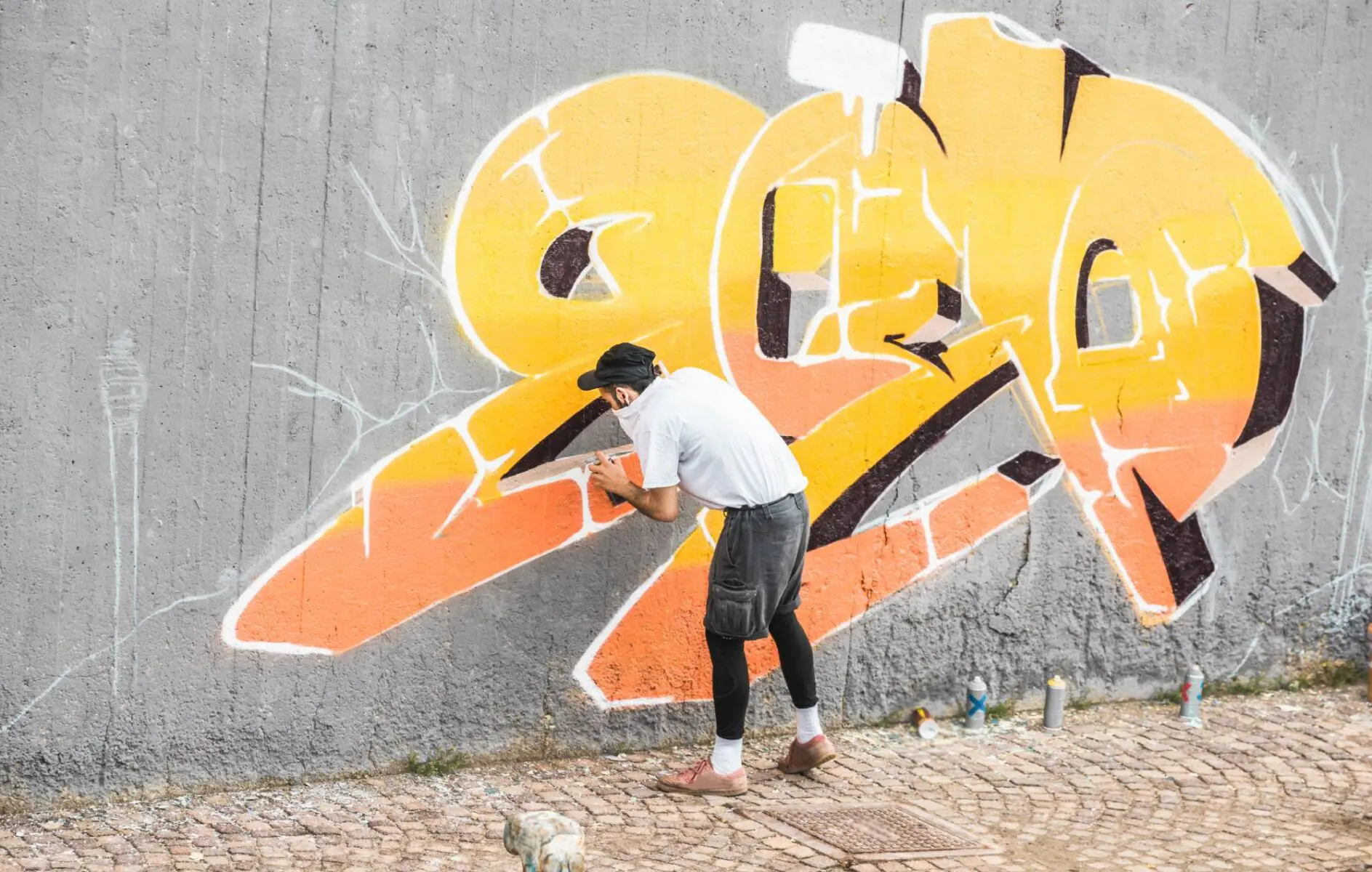
A history of street art in London
London’s walls tell stories that museums never could. Painted railway arches, canal bridges, brick warehouses, and forgotten alleyways have all become places where artists leave their mark. Some works disappear within days beneath fresh layers of paint. Others become part of the city’s identity, drawing visitors from around the world.
As one of Europe’s leading street art capitals, visitors travel from around the world to explore the murals of Shoreditch and the legacy of artists such as Banksy and D*Face. Yet London’s street art movement began thousands of miles away in New York’s subway trains where modern graffiti first emerged.

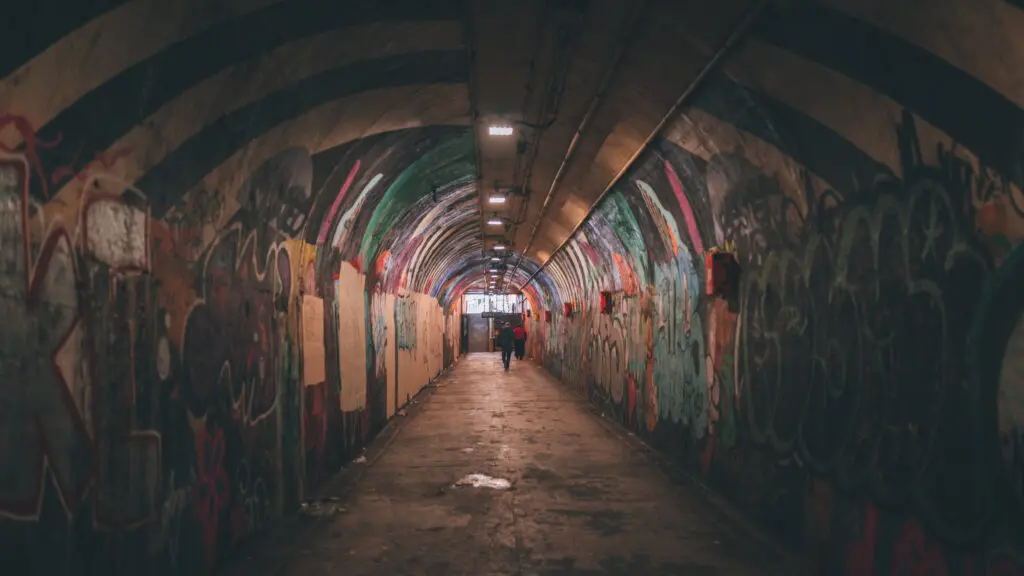
From New York’s subway cars to London’s streets
Modern graffiti emerged in New York in the late 1960s and early 1970s. Young writers began tagging subway trains and buildings, transforming simple signatures into increasingly ambitious artworks that travelled across the city. As the movement grew alongside hip-hop culture, graffiti developed its own styles, techniques and unwritten rules.
During the 1980s, those influences reached Britain. Early London writers adopted the bold lettering and energy of New York, adapting them to the capital’s streets. Railway corridors, underpasses and industrial estates became the city’s first outdoor canvases, where recognition came from fellow artists rather than the wider public.
At this stage, graffiti centred on tags, throw-ups and elaborate letterforms. Large figurative murals were still relatively uncommon, but the foundations of London’s street art movement had been laid.
London’s graffiti scene finds its own identity
By the 1990s, London’s urban art scene had developed a character of its own. Artists experimented with new materials and techniques, moving beyond lettering into illustration, satire and graphic design.
Alongside spray paint, artists increasingly used:
- Stencils
- Wheat-paste posters
- Stickers and paste-ups
- Hand-painted illustrations
- Large-scale murals
Characters, symbols and social commentary began appearing alongside traditional graffiti pieces. As styles evolved, the distinction between graffiti and street art became less clear. Some artists continued working illegally, while others collaborated with local communities and property owners, demonstrating how public art could transform neglected spaces into cultural landmarks.
How Shoreditch became London’s outdoor street art gallery
Few places illustrate London’s street art story better than Shoreditch.
Following industrial decline during the late twentieth century, many warehouses and factories stood empty. Affordable rents attracted artists, designers, photographers and musicians, turning the area into one of London’s most creative neighbourhoods. Blank brick walls offered space to experiment, and artwork began appearing on streets that had previously gone unnoticed.
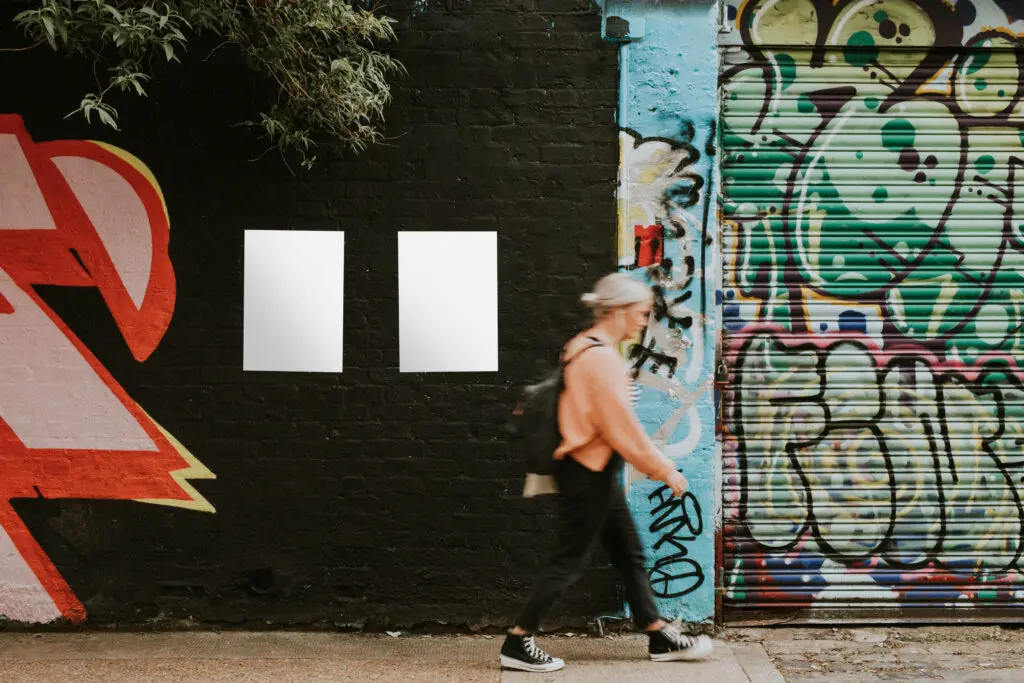
By the early 2000s, Shoreditch had become London’s best-known street art destination. Local artists painted alongside international names, creating an outdoor gallery that changes almost daily. Murals appeared beside stencils, paste-ups and hand-painted pieces, giving every street its own personality.
Today, Brick Lane, Hanbury Street, Fashion Street and Redchurch Street remain among the capital’s most photographed locations for street art. Much of their appeal lies in their constant evolution. A mural that becomes a local favourite may disappear within weeks beneath an entirely new piece.
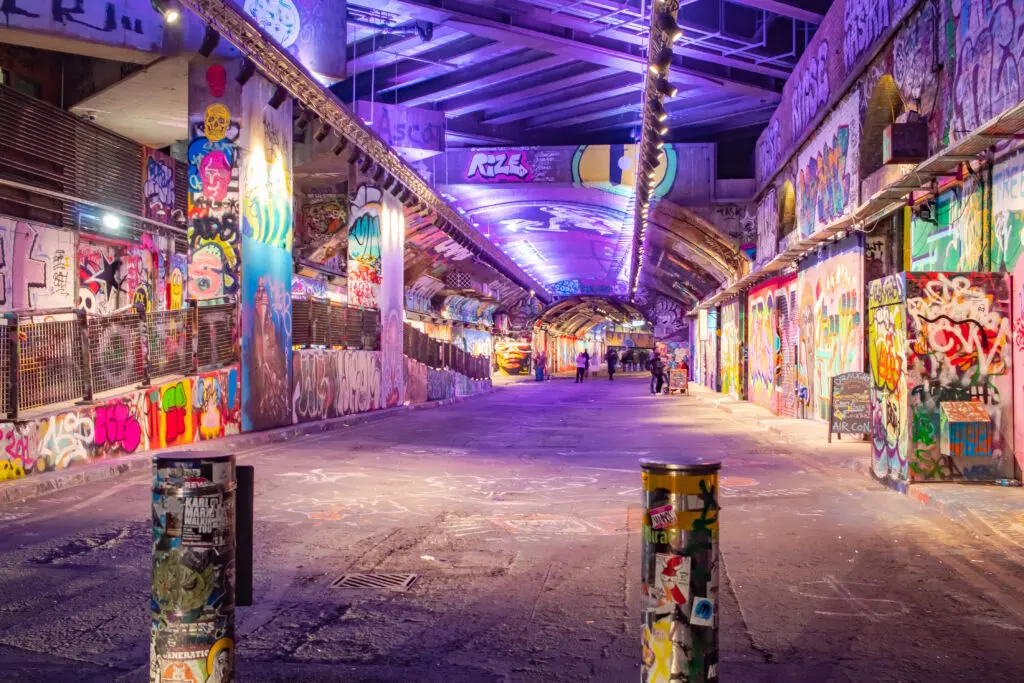
Famous street art in London
While London’s street art is constantly evolving, a handful of murals have become enduring landmarks that continue to attract visitors from around the world.
- David Bowie mural, Brixton: Painted by Jimmy C in 2013, this portrait of Bowie as Aladdin Sane became a place of tribute after his death in 2016. It’s now one of London’s most photographed murals
- ROA’s Crane, Hanbury Street: Belgian artist ROA’s towering monochrome crane has become a symbol of Shoreditch and remains one of East London’s most celebrated murals
- Banksy’s Guard Dog, Rivington Street: Preserved behind Perspex, this stencil is one of the few surviving Banksy works that can still be viewed in its original London location
- Banksy’s His Master’s Voice, Rivington Street: Another rare surviving Banksy, featuring the artist’s satirical take on the iconic HMV logo
- Ben Eine’s I DON’T WANT TO BE LIKE THIS ANYMORE, Ebor Street: A colourful typographic mural that reflects the artist’s instantly recognisable lettering style
- Jimmy C’s Whitby Street Lady, Shoreditch: Created using the artist’s signature pointillist technique, this portrait has remained a local landmark for more than a decade
- Leake Street Tunnel, Waterloo: Unlike a single mural, this legal graffiti tunnel is famous because the artwork changes almost every day, offering a new experience with every visit
While many murals disappear beneath fresh paint, these works have become part of London’s cultural landscape. Alongside them, new pieces continue to appear across Shoreditch, Camden, Hackney Wick and beyond, ensuring the city’s street art scene never stands still.
When Banksy changed the conversation
No history of London’s street art would be complete without mentioning its most famous figure, Banksy.
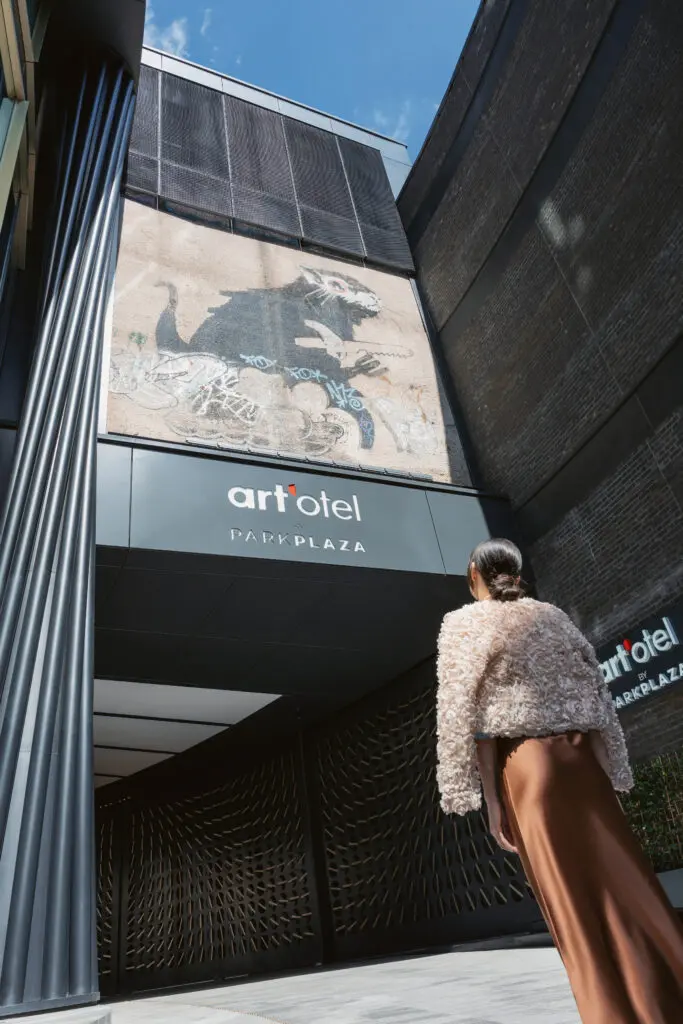
Although Bristol shaped his early career, many of his most recognisable stencils appeared across Shoreditch, Clerkenwell and in East London. His work combined humour, political commentary and visual simplicity, introducing street art to audiences far beyond the graffiti community.
As Banksy’s profile grew, public attitudes towards street art began to shift. Galleries, collectors and cultural institutions increasingly recognised street art as an important contemporary art form rather than simply vandalism. Shoreditch became an international destination for visitors hoping to discover the next iconic mural.
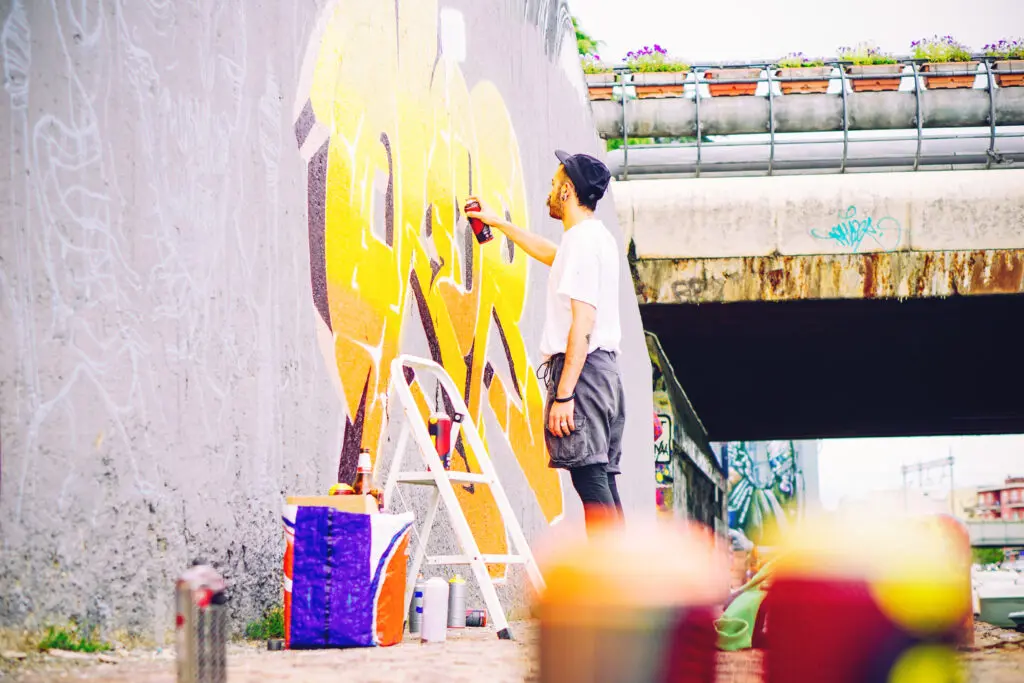
Street art enters the mainstream
Throughout the 2000s and 2010s, London’s reputation continued to grow. Artists travelled from around the world to paint alongside local talent, while festivals, businesses and local organisations commissioned increasingly ambitious murals.
The movement also expanded indoors. Galleries began exhibiting artists whose careers had started on brick walls, allowing collectors to experience work that might otherwise disappear beneath fresh paint. This relationship between the street and the gallery remains one of London’s defining characteristics.
Street art still embraces change. Murals are painted over, buildings are redeveloped, and artists continue searching for new spaces. That temporary nature is part of what keeps London’s streets so compelling.
D*Face and London’s contemporary street art movement
Among the artists who have helped shape London’s modern street art scene, D*Face remains one of its most recognisable figures.
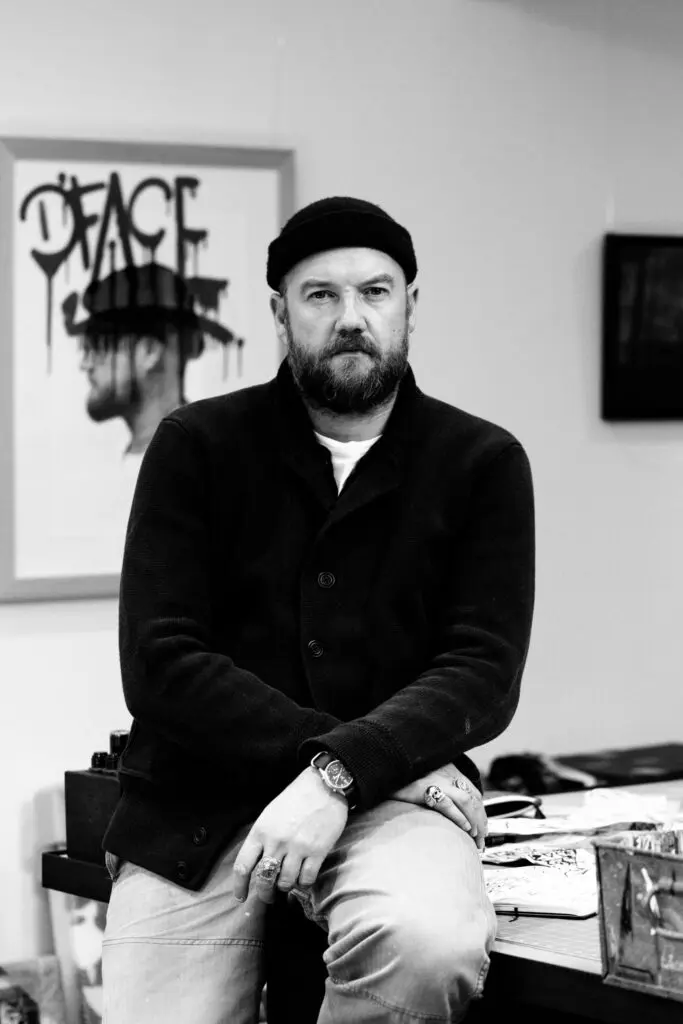
Born in London, Dean Stockton developed a style inspired by comic books, skate culture, punk and Pop Art. His instantly recognisable murals explore consumer culture, fame and identity through bold colours, winged characters and satirical imagery. Over the past two decades, his work has appeared on walls across London as well as cities including Los Angeles, New York, Paris, Tokyo and Melbourne.
D*Face has also played an important role in London’s wider urban art scene. In the early 2000s, he founded StolenSpace Gallery in Shoreditch, one of the city’s first galleries dedicated to contemporary urban art. It helped bring street artists into gallery spaces while maintaining close ties to the culture that inspired them.
Street art galleries in London
London’s galleries demonstrate how street art has evolved from an underground movement into an established part of contemporary art.
- StolenSpace, Shoreditch: Founded by D*Face, this influential gallery champions contemporary urban artists from the UK and around the world
- Nelly Duff, Columbia Road: Known for limited-edition prints and exhibitions by established and emerging street artists
- Pure Evil Gallery, Shoreditch: Showcasing pop-inspired urban contemporary art and works by Pure Evil alongside guest artists
- BSMT Space, Dalston: Exhibiting work by international muralists, graffiti artists and emerging contemporary talent
- Jealous, Shoreditch: A specialist print studio and gallery renowned for screen prints and artist collaborations
- Graffik Gallery, Notting Hill: Dedicated to graffiti and street art, with exhibitions, workshops and live painting events
Discover D*Face at art’otel London Hoxton
The story of London’s street art continues to evolve, and few places celebrate that heritage more closely than art’otel London Hoxton.
As the hotel’s Signature Artist, D*Face has transformed the building into an immersive artistic experience. Original murals, sculptures and specially commissioned works appear throughout the hotel, while his monumental bronze sculpture D’s Little Helper welcomes visitors outside. The hotel stands just moments from the streets where his career first began, creating a fitting connection between London’s past and present street art scene.
London’s street art offers something new with every visit, whether you’re exploring Brick Lane for the first time or returning to see how the streets have evolved. It remains one of the city’s most dynamic art forms, with each new mural adding another chapter to a story that’s still being written.

